Welcome!
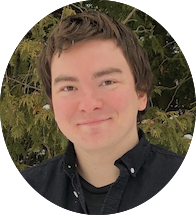
Hello, I’m Tom! I’m a Lecturer of Cognitive Neuroscience at the University of Manchester. My research is focused on electrophysiological recordings in human subjects, including methods and applications for analyzing single-unit, periodic, and aperiodic electrophysiological neural activity and how it relates to neural computation, cognition, and disease. For a high-level overview, my research work has been covered in Quanta Magazine (reprinted by Wired), and is also described on the research page.
For the full scientific version, you can check out my list of publications, and/or my CV.
On this site you can find out a bit about me and my work, including:
- Research: a narrative description of my research work
- Code: links and descriptions of available code
- Resources: links and descriptions of various resources that I work on
- Teaching: links and descriptions of my teaching activities
- Blog: miscellaneous writing, including a mixture of research and personal topics
Brief Profile
When starting university, I chose to study Cognitive Science, a major I originally chose as it offered a way to explore multiple topics of interest across the fields of psychology and biology. This fostered my interest for how interdisciplinary approaches allow for investigating broad and interesting questions from multiple distinct perspectives. As I got more involved in research, I realized that a lot of the day-to-day work in psychology / neuroscience / cognitive science relies on developing and applying computational measures and analyses to often large and complex datasets. This started me down the path of furthering my understanding and skills in methods development, software, and computational analyses - all in the service of better investigating questions of interest in cognitive neuroscience.
To pursue these questions, I did my PhD program, also in Cognitive Science, in the lab of Prof. Bradley Voytek. In particular, I became interested in questions relating to how to best measure and interpret features of interest in neural data, especially with electrophysiological recordings of brain activity that can provide direct information on patterns of activity in the brain with high temporal precision. This led me to a research program focusing on trying to understand electrical signals in the brain - investigating how we can measure them, and what they might mean physiologically. After my PhD, I continued this work during my postdoc with Prof. Joshua Jacobs, in which I worked on methods and empirical analyses intracranial recordings from human neuro-surgical patients, including human single-neuron recordings.
Across all of my research, my work often focuses on open-source tool development and other code contributions, as well as employing and developing approaches that are transparent and accessible (for example, using and releasing open data and developing openly accessible tools and resources). Ultimately, this work is in service of improving and supporting empirical work, and my work is embedded into empirical data analysis through the examination of openly available datasets and multiple collaborations, covering topics including investigating functional neural organization, methods development for neuro-electrophysiological data, and investigating how patterns of electrical neural activity relate to cognition and disease.
Ultimately, to me one of the main joys of science is getting to work with lots of interesting people, with all of my work drawing directly or indirectly from collaborations across many wonderful mentors, research assistants, colleagues, collaborators, teaching assistants and code contributors. If you are interested in the work that I do, and/or would be interested in collaborating, please do not hesitate to get in contact!
Contact
If you’d like to get in touch, you can e-mail me at tdonoghue.research@gmail.com.
You can also find me on Github or Bluesky.
Website Source
This website is hosted using Github pages, and the source repository is available here.
This page is usually fairly up to date. You can check the last updated date on website update log.